
Updated on: 6/8/2025

How Garnishes Affect the Taste of a Cocktail

The right garnish can do more than make a drink look appealing—it can expand the flavor profile and elevate the sensory experience. Using a carefully chosen garnish is one of the simplest ways to influence how a cocktail tastes, smells, and lingers on the palate.
Flavor and Aroma: Why Garnishes Matter
Garnishes interact with the main ingredients of a cocktail in several ways. Fresh herbs, fruit peels, or even simple twists can introduce new aromas, add subtle flavor layers, or highlight existing notes within the drink. When a citrus twist is expressed over a cocktail or a mint sprig is lightly slapped before adding, aromatic oils are released, engaging the drinker’s sense of smell with every sip. Because aroma and taste are closely linked, even a garnish that never touches the liquid can make the cocktail taste brighter, deeper, or more complex.
Ways Garnishes Can Affect Taste
- Aromatics change the perception of flavor—a twist of orange peel adds citrus oil that brightens spirits-forward drinks like a Negroni or Old Fashioned.
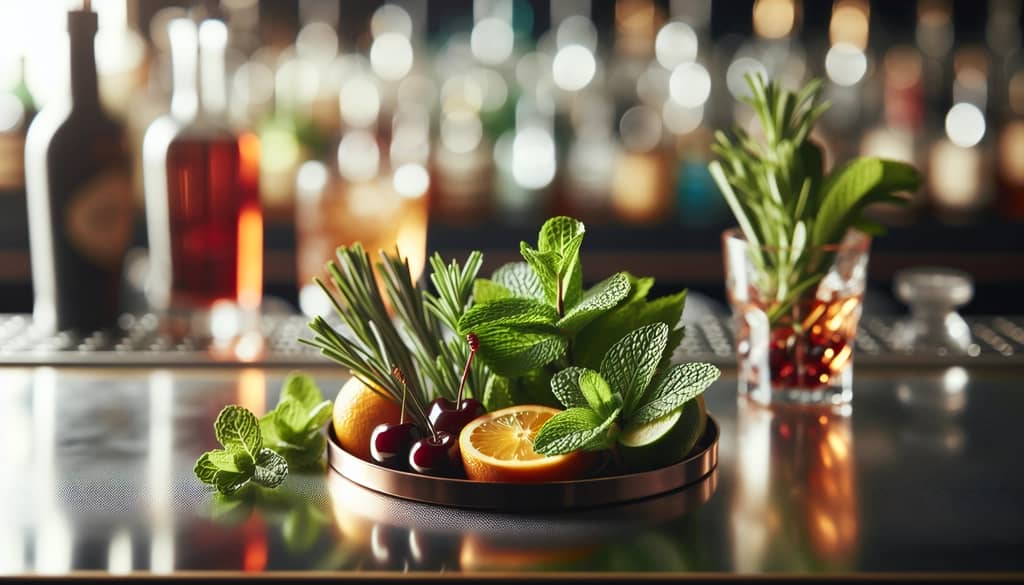
- Fresh herbs such as mint, basil, or rosemary give off green, herbal notes that refresh the palate or make certain flavors pop.
- Infused or flavored garnishes—like cherries, spiced syrups, or dehydrated fruits—subtly release sugars or spices, especially as they soak in the drink.
- Rimmed glasses (salt, sugar, spices) introduce a burst of flavor on first sip and can highlight or balance the cocktail’s main taste profile.
- Edible flowers lend delicate fragrance, sometimes giving floral or earthy undertones as the cocktail is lifted to sip.
Common Garnishes and Their Effects
- Lemon or lime twists: Bring brightness and clean bitterness.
- Mint sprig: Adds a cooling, herbal hit, especially in juleps and mojitos.
- Candied ginger: Offers spice and subtle sweetness for sour and tropical drinks.
- Cherries (brandied or maraschino): Infuse a touch of sweetness and a soft almond note.
- Rosemary or thyme: Give savory, pine-like depth for spirit-forward sippers.

Tips for Balancing Garnishes and Flavors
- Match the garnish to the main flavors—citrus for sours, herbs for herbal or botanical spirits.
- Keep garnishes fresh; wilted herbs or dried-out fruit distract from quality.
- Avoid overpowering the drink—garnishes should enhance, not mask, the core flavors.
- Test both aroma and taste: swirl or express aromatic garnishes over the drink to release essential oils.
- Use just enough to deliver impact; more isn’t always better.
Beyond Looks: Why Garnish Choices Matter
Every garnish choice can subtly change the outcome of a cocktail, affecting not only aroma and taste but also the way the drink is experienced from first glance to final sip. Matching the garnish to the drink’s profile creates harmony; sometimes, a bold contrast can highlight new flavors. Whether mixing at home or behind a bar, a thoughtful approach to garnishing can turn a simple cocktail into a memorable one.