
Updated on: 6/8/2025

How Should I Store Herbal Liqueur?
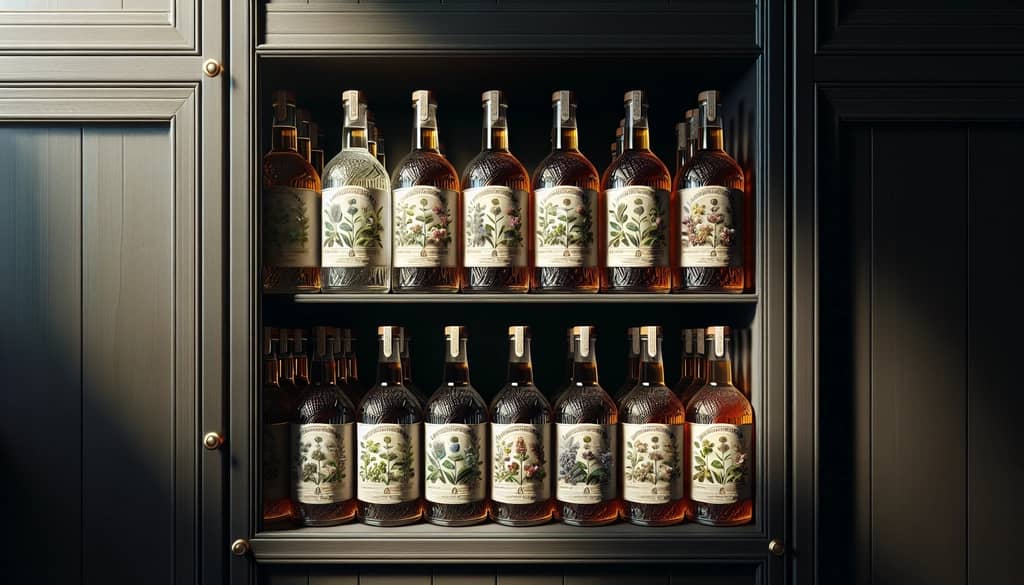
Herbal liqueurs—from verdant Chartreuse to intensely aromatic Bénédictine—capture the flavors of dozens of botanicals in a silky, spirit-forward base. Storing these complex elixirs properly preserves both their bold aromatics and subtle undertones.
Key Principles for Herbal Liqueur Storage
- Keep bottles in a cool, dark place—ideally a cupboard, liquor cabinet, or cellar away from heat sources.
- Protect from direct sunlight, which can degrade botanicals and fade color.
- Store upright to prevent contact with the cap or cork, reducing the risk of flavor leaching or cork taint.
- Re-seal the bottle tightly after each use to minimize oxidation and evaporation.
Do Herbal Liqueurs Need Refrigeration?
Most herbal liqueurs (such as Chartreuse, Bénédictine, Jägermeister, or Amaro) are high enough in alcohol and sugar to remain shelf-stable when unopened. After opening, you don’t need to refrigerate, but cooler temperatures (below 20°C) preserve aromatics longest. For homemade liqueurs with lower alcohol content, keep them in the refrigerator.
How Long Does an Opened Herbal Liqueur Last?
- Opened commercial herbal liqueurs (ABV above 20%) often keep their flavor for up to a year when properly sealed and stored out of light.
- Over time, fresh herbal notes will fade and the spirit may taste flatter—even if it’s still safe to drink.
- If sediment forms, color fades dramatically, or flavor is off, consider replacing the bottle.
Should I Decant or Transfer Herbal Liqueur?
For most home bartenders, keeping herbal liqueur in its original bottle is ideal. Decanting is unnecessary and may introduce extra air or loss of aroma. If your collection contains many nearly empty bottles, transfer the remainder to a smaller, airtight bottle to slow oxidation.
Additional Tips for Herbal Liqueur Freshness
- Write the date opened on the label for easy tracking.
- Avoid oscillating temperatures—don’t store near kitchen stoves or windows.
- Use clean glassware or jiggers to avoid introducing contaminants into the bottle.